
In recent years, healthcare marketing has become very loud. Every week, clinic owners and Medical Doctors hear that they must be on Instagram, post short videos on TikTok, grow a YouTube channel, or rely completely on directory listings and their Google Business Profile. Because of all this noise, some practice owners start to ask a reasonable question: “Do we still need to invest in a serious website if patients find us on social media or Google Maps?”
The answer is a clear yes. While social media platforms and local listings are great tools for getting attention, they are rented spaces. You do not own them, and you do not control their rules.
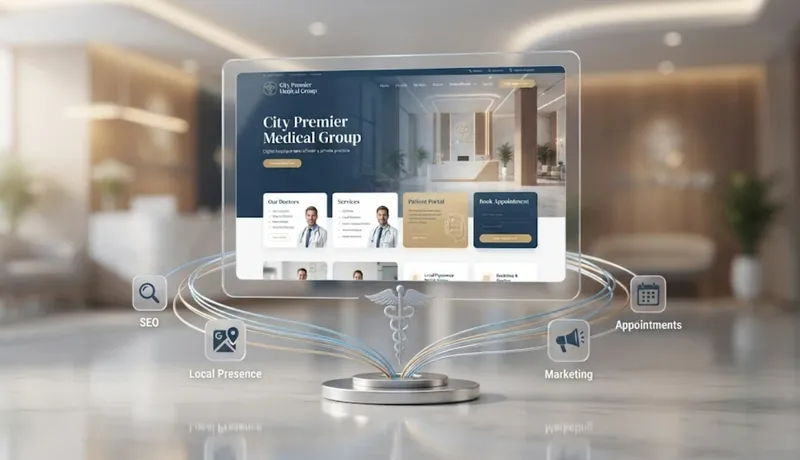
In today’s digital environment, a professionally built, custom website remains the single most important asset for your clinic. It is the digital headquarters of your medical or dental practice-the one place online that you completely own and control.
Why Social Media and Listings Cannot Replace a Website
Think about how a real patient makes a decision when choosing a doctor, dentist, or aesthetic specialist.
A prospective patient might first see a short video on Instagram or notice your clinic on Google Maps. That sparks their interest. However, before trusting you with their health and spending hundreds or thousands of dollars on treatment, they want deeper proof. They will almost always look for your official website.
Social media feeds are chaotic and temporary; a post you published two weeks ago is already buried. Directory profiles look identical for every doctor in town and often show ads for your competitors right next to your name. Only your own website allows you to present your practice calmly, thoroughly, and without distractions.
The Trap of the “$200 Template Website”
Recognizing that they need a site, some clinics try to save money by buying a cheap $200 template or hiring someone to put together a basic page over a weekend. Unfortunately, in healthcare, a cheap website often does more harm than good.
Patients judge the quality of your clinical care by the quality of your digital presence. If a website looks generic, loads slowly on a smartphone, or feels disorganized, patients subconsciously assume the clinic itself might be outdated or careless. Furthermore, generic templates are usually overloaded with heavy, poorly written code that hurts your Google rankings and makes it difficult for AI assistants like ChatGPT to read your information.
What a True “Digital Headquarters” Does for Your Practice
When your website is thoughtfully engineered with a custom design tailored specifically to your clinic’s strengths, specialties, and local market, it works for you 24 hours a day. A strong medical website serves four essential roles:
- Complete, Structured Information: It gives patients clear, detailed answers about every service you offer, transparent pricing or insurance options, treatment steps, and post-care instructions.
- Building Personal Trust in Your Doctors: Patients choose people, not just buildings. Your website is the best place to showcase your Medical Doctors’ education, clinical experience, philosophy of care, and real patient results.
- Frictionless Booking and Direct Contact: Whether a patient wants to schedule an appointment online at 11:00 PM or tap one button on their phone to call your reception desk directly, a custom site makes the path from interest to booked visit fast and effortless.
- The Central Hub for All Marketing: Every campaign you run, whether it is Google Ads, Local SEO, AI search optimization, or an Instagram reel, ultimately leads back to your website. When your digital headquarters is fast, persuasive, and properly tracked, every other marketing channel becomes more profitable.
Conclusion
Social media trends come and go, and algorithms change without warning. Your website is the permanent foundation of your brand. By investing in a custom, well-structured, and professionally optimized website, you create a reliable digital headquarters that builds patient trust, supports all your marketing channels, and turns online visitors into long-term patients.